
The Maasai Mara is Africa’s greatest wildlife destination because it offers the highest year-round concentration of predators and herbivores on the continent. Unlike larger, more dispersed parks, the Mara’s 1,510 square km ecosystem provides accessible, high-density sightings of the Big Five and the world-renowned Great Migration, making it the global benchmark for safari excellence.
A Concentration of Life Found Nowhere Else
While Africa is home to vast wilderness areas like the Serengeti or the Kruger, the Maasai Mara (part of the larger Mara-Serengeti ecosystem) is unique due to its sheer wildlife density. In the Mara, you don’t just “find” wildlife; you are immersed in it.
The Mara accounts for approximately 25% of Kenya’s total wildlife despite its relatively compact size. This concentration means that during a single game drive, guests often encounter a higher volume of species—and more dramatic behavioral interactions—than in a week elsewhere.
The Predator Capital of the World
The Maasai Mara is arguably the best place on Earth to observe large carnivores in their natural habitat. The open savannah provides an unobstructed stage for the “Big Three” cats:
- Lion (Panthera leo): The Mara is home to some of the world’s most famous and well-studied lion prides.
- Leopard (Panthera pardus): Along the riverine forests of the Talek River, leopards find the perfect vertical cover to ambush prey and protect their kills.
- Cheetah (Acinonyx jubatus): The Mara’s flat plains are the ultimate hunting ground for the world’s fastest land animal, which relies on high-speed bursts to secure its meal.
In our daily observations at Mara Big Five Camp, we see a complex web of competition. Spotted hyenas often challenge lions for kills, while the elusive African wild dog (Lycaon pictus) occasionally makes a rare, high-stakes appearance across the plains.
The Lifeblood of the Maasai Mara Ecosystem: The Talek River
While the Mara River is the famous site of the “Great Crossing,” the Talek River is the true biological heart of the eastern Mara. As a primary tributary, the Talek creates a lush corridor that sustains life even in the driest months.
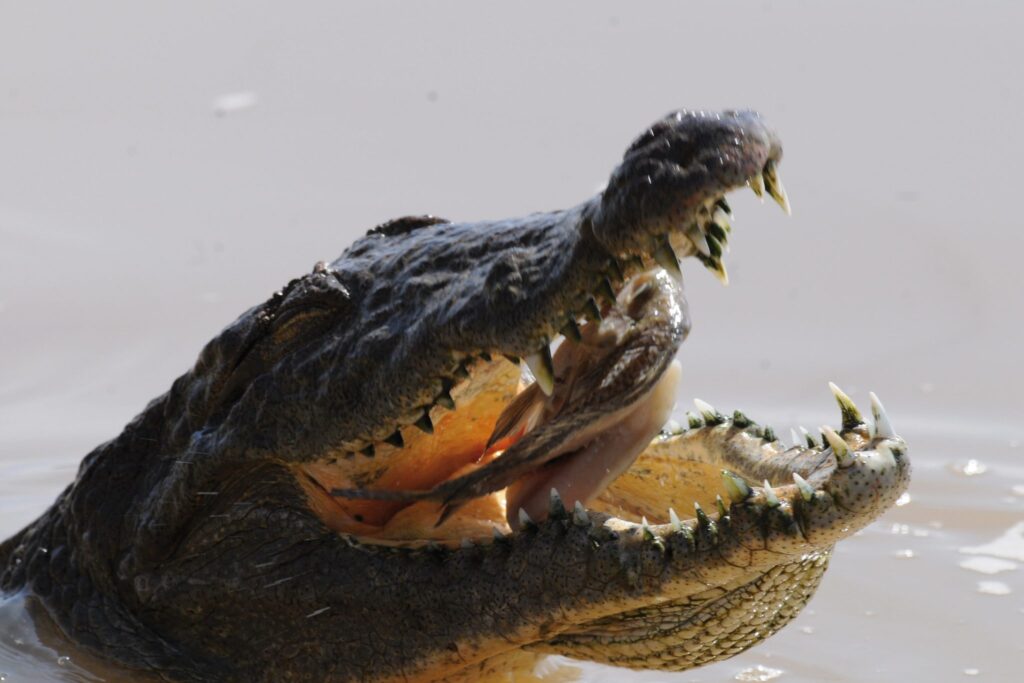
At Mara Big Five Camp, we’ve positioned ourselves along this corridor because it acts as a natural magnet for wildlife. The riverine vegetation provides cover for bushbuck and warthogs, while the deep pools harbor pods of hippopotamus (Hippopotamus amphibius) and Nile crocodiles (Crocodylus niloticus). For a traveler, this means the safari begins the moment you step onto your tent’s veranda.
The Great Maasai Mara Migration: A Natural Wonder
The Maasai Mara is the northern terminus of the Great Wildebeest Migration. Between July and October, over 1.5 million wildebeest (Connochaetes taurinus), 200,000 zebras, and hundreds of thousands of gazelles enter the Mara from the Serengeti.
This isn’t just a movement of animals; it is a total transformation of the landscape. The sound of the herds is constant, and the air is thick with the scent of the plains. For many, witnessing a river crossing—where thousands of animals brave crocodile-infested waters—is the pinnacle of all wildlife travel.
“Wild By Night”: The Exclusive Conservancy Advantage
What truly elevates the Mara as a destination is the model of community conservancies. Mara Big Five Camp’s location in the conservancy area provides a level of exclusivity that national parks cannot match.
The “Wild By Night” experience allows us to explore the savannah after the sun sets. When the daylight visitors return to their lodges inside the reserve, our guests are just starting their second safari. This is the hour when the aardvark emerges, the leopard begins its hunt, and the nightjars take flight. It is a raw, sensory immersion into an African night that remains hidden to 90% of Mara visitors.
A Cultural Landscape
The “Mara” takes its name from the Maasai word for “spotted,” describing the landscape of short, bushy trees. But the destination is also defined by the Maasai people themselves. Their presence as traditional guardians of this land is the reason the wildlife still thrives. A visit to the Mara is as much about the red-shukkas of the Maasai warriors and their deep ecological knowledge as it is about the animals.
FAQ: Why the Maasai Mara?
What makes the Maasai Mara unique compared to other parks?
The Mara offers a “concentrated” safari experience. While the Serengeti is 10 times larger, the wildlife in the Mara is easier to find and observe because the animals are more densely packed into a smaller geographical area.
Is the Maasai Mara better than the Serengeti?
“Better” is subjective, but the Mara is often preferred for shorter trips (3–5 days) because you can see the Big Five much faster. It also offers the “conservancy” model, which allows for off-road driving and night game drives—activities strictly prohibited in the Serengeti National Park.
What is the best way to see the wildlife?
We recommend a “fly-in” safari. Flying directly into the Ol Kiombo or Talek airstrips saves you a 6-hour drive from Nairobi and puts you in the heart of the predator-rich Talek River area within minutes of landing.
Conclusion: The Unrivaled Safari Experience
There is a reason the Maasai Mara remains at the top of every wildlife bucket list. It is a place of high drama, ancient rhythms, and absolute wildness. At Mara Big Five Camp, we don’t just show you the Mara; we let you live it through our “Wild By Night” perspective on the banks of the Talek.To experience Africa’s greatest wildlife destination for yourself, enquire about our current rates and packages.